The great religions, Christianity and Islam, along with the great political and intellectual movements of modernity, from liberalism to democracy to modern science, all share an aspiration to speak equally to every person on earth. They understand themselves as universal. But Judaism is different. God’s covenantal relationship with the Jewish people was born in His love for Abraham and his descendants, whom He delivered from Egypt and made into a nation in the wilderness of Sinai. Judaism is thus particular, not universal, and its particularity is bound up with a national home in the Land of Israel, and its ancestral capital, Jerusalem. But in its very particularity, the Jewish people also have a universal significance that inspires other nations, and women and men of other faiths. The rabbi of Shearith Israel—America’s oldest continuously active Jewish congregation—Meir Soloveichik, asks why so many non-Jews around the world are so profoundly moved by Israel’s reunification of Jerusalem, and the U.S. decision to relocate its embassy there, while exploring the universal significance of Jewish Jerusalem.
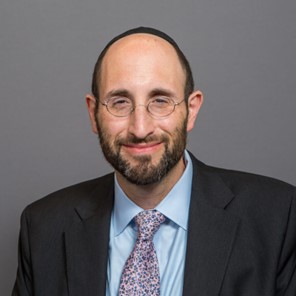
Rabbi Dr. Meir Y. Soloveichik
Rabbi Dr. Meir Y. Soloveichik is one of the world’s preeminent Jewish thinkers and educators, and he’s one of America’s most influential religious leaders. He is the senior rabbi of Congregation Shearith Israel in Manhattan, the oldest Jewish congregation in the United States. He is also director of the Zahava and Moshael Straus Center for Torah and Western Thought at Yeshiva University. Rabbi Soloveichik has lectured internationally to Jewish and non-Jewish audiences on topics relating to faith in America, the Hebraic roots of the American founding, Jewish theology, bioethics, wartime ethics, Jewish-Christian relations, and more. He writes a monthly column in Commentary magazine, and his writing has appeared in The Wall Street Journal, The New York Times, Mosaic, First Things, Azure, Tradition, Jewish Review of Books, and many other outlets. Rabbi Soloveichik is a descendant of one of the Jewish world’s great rabbinic dynasties. He graduated summa cum laude from Yeshiva University, received his rabbinic ordination from the Rabbi Isaac Elchanan Theological Seminary, and studied at its Beren Kollel Elyon. He has also studied at Yale Divinity School, and in 2010 received his doctorate in religion from Princeton University.